By Lucas Freire, journalist and member of the Pororoka Collective
Felipe Ranieri, a young man from the state of Amapá, has reflected from an early age on what separates the center from the periphery within a region. After living in Belém for the past four years, the experience of inhabiting a different territory—one marked by challenges and contradictions similar to those of his home state—has transformed the way he understands this relationship.
"As someone from Amapá, I always saw my own state as a peripheral region and Belém as the center, at least within Brazil's Northern Region. But now I realize that Belém also has its own contradictions. When we share these perspectives with people from different places, we begin to see how our region is full of contradictions that need to be understood and addressed step by step," he says.

Felipe is one of many young people who took part in Lab.Juventudes (Youth Action Lab), a training program organized by Coletivo Pororoka in partnership with the Amazon Research Group and Canto Coworking. Held throughout July, the program combined online and in-person sessions, bringing together participants from different parts of Belém and its metropolitan area to discuss the connections between energy, climate, and territory.
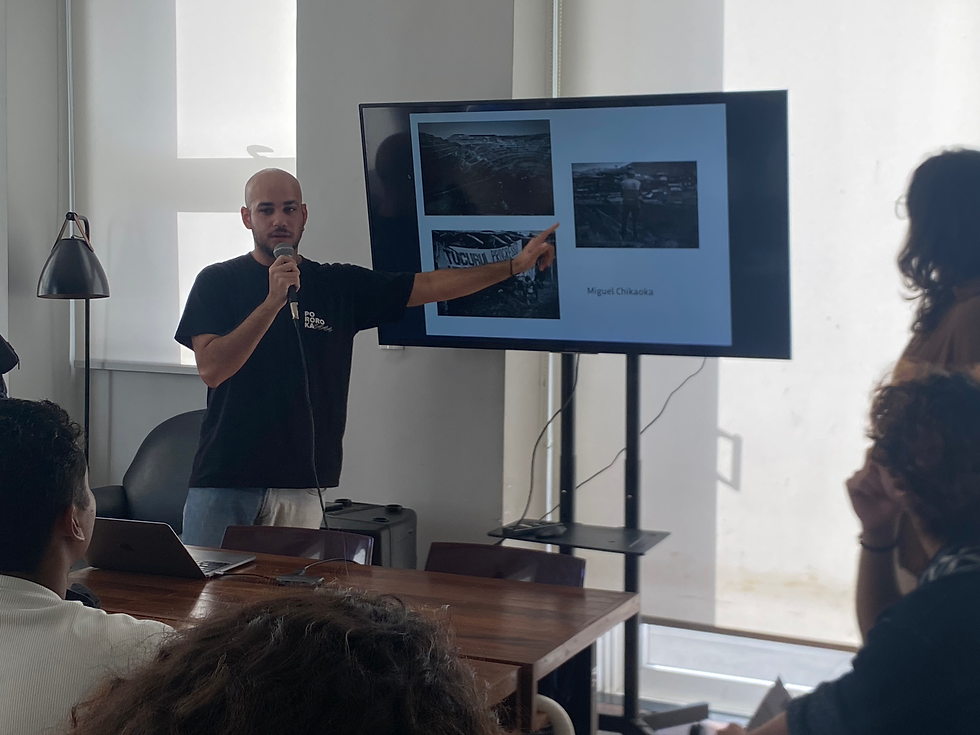
Stephan Sampaio, coordinator of Lab.Juventudes, explains that the program was designed to amplify participants' voices and strengthen their ability to take action within their own communities.
"We hope that by creating and strengthening the participants' capacity for expression through Lab.Juventudes, we will see initiatives that grow beyond the projects developed in this space. We hope the potential we've cultivated here becomes seeds that create more and more opportunities for these young people to take action in their territories and to engage in political intervention, whether through their own initiatives or in other spaces," says Stephan.

Beyond the exchange of experiences, participants emphasized that the program's methodology was one of its greatest strengths. For student Rubens Antero, the experience broke away from the traditional classroom model by encouraging dialogue, active participation, and the collective construction of knowledge.
"What I take away from this experience is a broader perspective on lived realities and a better understanding of both institutional dynamics and active learning methods. It was a very rewarding process, completely different from a traditional classroom where we simply sit, listen, and receive information. Here, our voices became part of the discussion, and we were equipped with both theoretical and practical tools to talk about change within our territories and to help those conversations reach places beyond Belém," he says.
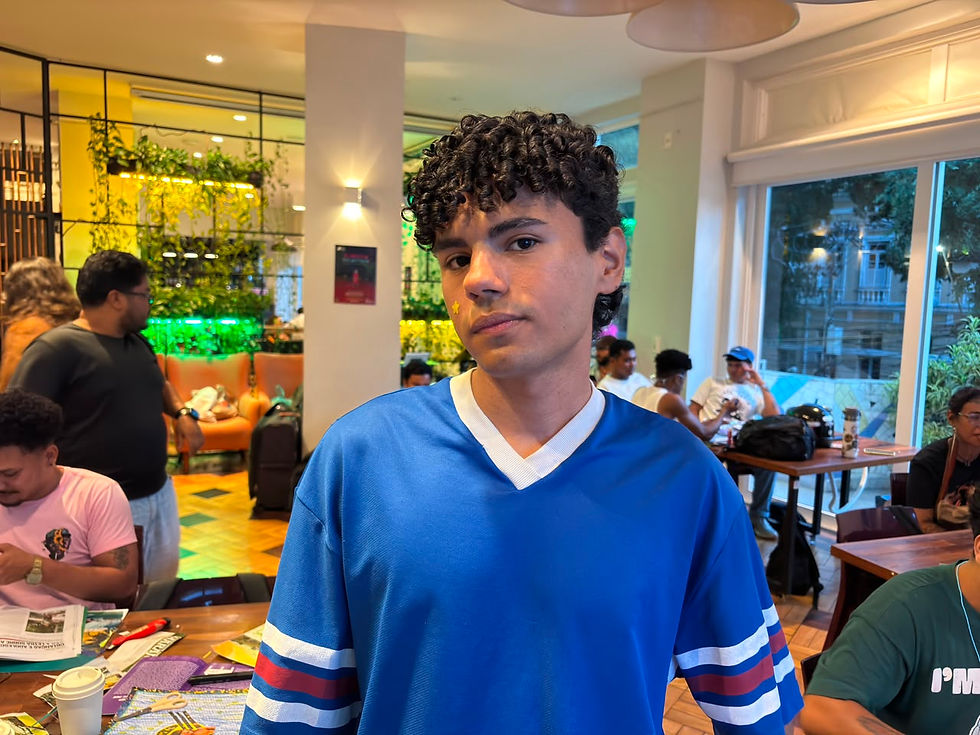
The closing event of Lab.Juventudes featured an artivism workshop, where participants created artworks portraying the impacts of climate change on their neighborhoods, streets, and communities.

"This workshop was the culmination of all the discussions that took place throughout Lab.Juventudes. It explored how we can communicate with and inspire people in public spaces through artistic production. Our goal was to introduce methodologies and tools—in this case, creating wheatpaste posters—that these young people can take back and apply in their own territories," explains Luísa Brasil, an artivist with Coletivo Pororoka.
All of the artworks created by the participants will be brought together in a virtual exhibition hosted by the Cyber Atelier of the Amazon Artivist Network. The central hope now that the event has come to an end is that every discussion and idea sparked throughout the program will become a seed for future action, empowering young people to drive change and foster meaningful interventions within their own territories.