
By Elielson Almeida, journalist and member of the Pororoka Colective
It is a weekday, but no canoes went out fishing in the fishing communities in the municipality of Salvaterra, on Marajó Island. The boats remain on the sand. Beside them, the fishing nets lie stretched out, waiting for the moment when they can return to the river. Lucivaldo Santos walks among them with a sense of nostalgia for a time that seems increasingly unlikely to return. “Today is a workday, but there are no fish. If there were fish, everyone would be out there”, says the fisherman.
Large vessels pass through Marajó Bay every day, a flow of ships that has intensified particularly over the past ten years. Along the riverbanks, fishing communities such as Água Boa, Jubim, Passagem Grande, Joanes, and Monsarás rely on these same waters for fishing and to secure their families' livelihoods. While accounts vary from community to community, they all point to a shared concern: the growing difficulty of making a living from fishing.

The fish have disappeared
It was at night that Lucivaldo Santos used to find the greatest abundance of fish, but today he is afraid to go out on the water and risk not being seen by large vessels. “We can’t go out fishing at night anymore. Ships pass all the time, day and night. They don’t respect anyone. They run over our nets and take everything with them. We only go out during the day now. There used to be more fish at night, but we don’t work then anymore because of this”, Lucivaldo says.

From a distance, the ships seem silent. Underwater, it is a different story. Lucivaldo says the noise drives the fish away. “Dive here by the shore when a ship passes. You can hear the noise it makes underwater. Do you think the fish will stay? They don’t. They swim away”, Lucivaldo explains.
What Lucivaldo reports in Água Boa is echoed in conversations with fishermen from other communities on Marajó Island. Declining fish stocks, the need to travel ever-greater distances, and rising fishing costs are all part of the same set of concerns shared by those who depend on this activity in the archipelago.
Moacir Brasil also started fishing at an early age, when he was 13. Now 54, he says finding fish requires increasingly longer trips, more fuel and much more time away from home. The transformation of the waters is a growing concern for those who depend exclusively on fishing to support their families.
“I studied until the fifth grade. I never learned another profession. Fishing has been my life. I started fishing and I want to finish my life doing it, God willing. I want to reach retirement as a fisherman. But the possibility of that disappearing is frightening. If the fish suddenly run out, things will get complicated. I don’t know how to do anything else”, the fisherman says.

The change can also be measured by the species that have disappeared. Yellow croaker and white croaker are increasingly rare in the nets. Dourada fish have nearly disappeared from the region. Among the species that still support part of the fishing activity, catfish and piramutaba are the main ones left.
The abundance that marked the childhood of the current generation of fishermen has given way to a routine of uncertainty. “July used to be a time when there were plenty of fish. Today, we suffer throwing out the nets, pulling them back in, and sometimes we don’t even catch a single fish to eat”, Lucivaldo laments.
“I fished Monday, Tuesday and Wednesday. I made 152 reais. I spent 40 reais on gasoline, split it with my partner, and we couldn’t even buy a kilo of meat. Can you support a family like that? You can’t”, Moacir adds.
Now the fish comes from Belém
Changes have also reached commerce in the fishing communities.. For years, beach vendors bought the fish right there, directly from the fishermen. The catch would come off the boats, cross a few meters of sand and supply the stalls along the waterfront. Today, that route has been reversed.
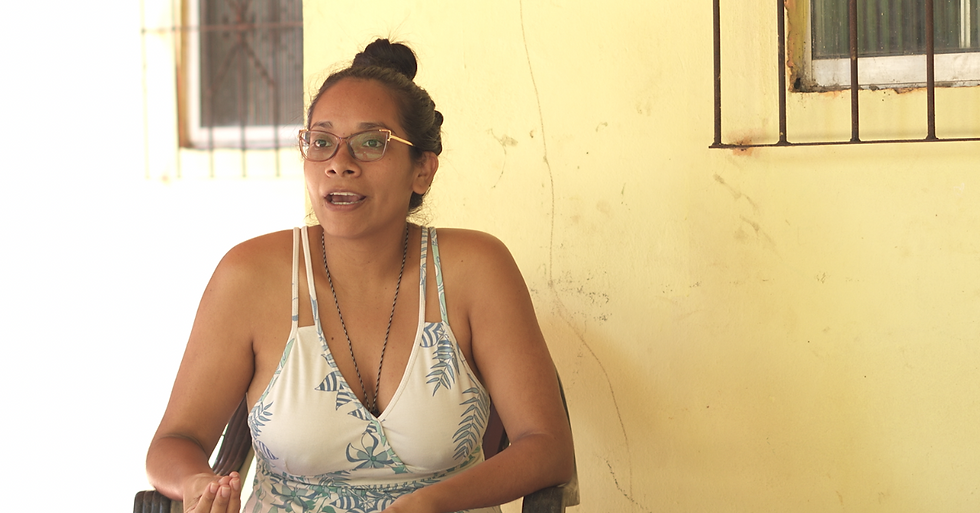
“In the past, July was a period when there was a lot of fish. The beach vendors would buy the catch right here in the community to sell. Today they have to get fish in Belém. Can you imagine? It’s as if everything has been turned upside down. Something that used to be ours, today we have to pay others to bring it to us”, explains Jaqueline Gonçalves, the daughter of fishermen.
No nets left to fish with
Before thinking about the next fishing trip, many fishermen have to spend days repairing fishing nets destroyed by ships. In one of the community’s sheds, Seu Moacir holds a broken cable while showing what is left of one of the nets.
“Look at the cable. And that’s not even counting the netting. It takes everything. The owner has to pay for it. Nobody pays. We’ve already spent four days just repairing this. It’ll take another four. No fishing”, he says.

Mending nets has never been unusual for those who make a living from artisanal fishing, but Marlon Sousa says the time devoted to this work has increased because of the extent of the damage caused. “We have to pay people to sew the nets, and we get nothing in return from these ships. Before, we would spend just a few days doing this. Now we stop for ten, fifteen days just sewing nets. That didn’t happen so often in the past. We also didn’t need to use as many nets as we do today”, the fisherman says.

“How would we survive?”
Growing up in a fishing family means learning early on that the household's food and income depend on the river. Jaqueline Gonçalves, 26, grew up hearing stories of a time when her father would return home with a boat full of fish—supplying both the family and the stalls set up on the beach.
“My father has been fishing since he was eight years old. There used to be plenty of fish; it was a time of abundance. Today, he goes out sad and discouraged. He spends money on fuel to go fishing and often gets nothing in return. The fish are no longer here like they used to be. They are getting farther and farther away”, Jaqueline says.
On the beach, a spring continues to bubble up just a few meters from Marajó Bay whenever the tide comes in, providing water for residents when the public supply system fails. It is water used for drinking and cooking.
“Marajó is a very welcoming place. What we have here is a very important wealth, and I am very proud to live here. If we could no longer use this beach, it would be very difficult. We live off fishing. How would we survive?”, she asks.
Efforts to protect the territory are also underway within Marajó itself. Established in 2001 following mobilization by extractive communities, the Soure Marine Extractive Reserve encompasses fishing grounds, beaches, and mangrove forests used by approximately 1,500 families. In 2024, the reserve became the first Brazilian protected area to be recognized on the International Union for Conservation of Nature (IUCN) Green List.

A future imposed
The changes experienced by the fishing communities have created a sense of uncertainty about the future. Jaqueline does not know whether her two young children will have the same memories she does: of a territory whose life has always been collectively organized around rivers.
Marlon, who has been fishing since he was ten and chose the profession for himself, does not know whether his son will follow the same path.
“Fishing is a job that demands a lot from us. Things have already changed somewhat because of modernization, but it is still hard work. It used to be much more physically demanding. There are still people who work with a lot of physical effort. But when I think about the next generation, about my son João Pedro, I don’t see him working in this field. I don’t want him to go through what we go through. Today, all my income comes from fishing. If fishing disappears, I’ll have to find another way to survive”, says Marlon Sousa.
Who decides what happens to those waters?
Concerns regarding the future of these territories are also widespread. In communities participating in the development of the protocol, the advance of large-scale projects is seen as a threat to the survival of an activity that is already struggling to persist.
Oil exploration at the mouth of the Amazon River is among the projects that have galvanized the fishermen. The daily impact of these challenges on those who rely on fishing has prompted residents from various Marajó communities to organize a collective response. They have begun developing a consultation protocol to define how they want to be heard by the State before new projects that could further affect their territories and ways of life are implemented. The process brings together memories, forms of occupation, knowledge about the waters and agreements developed by the communities themselves.
The question guiding the construction of the consultation protocol was simple: who should decide about a territory where families have lived from fishing for generations?
Nelson Bastos, coordinator of the GTA Marajó Network, has followed this mobilization from the beginning. A fisherman and community leader, he travels through communities such as Água Boa, Jubim, Passagem Grande, Joanes and Monsarás, helping coordinate the development of the protocol. For him, defending the territory begins with recognizing that these communities’ lives are deeply connected to the waters and the forest.

Nelson says the projects planned for the region have moved forward without consulting the people who live directly on and depend on the territory, and argues that this process must be reversed.
“We were not consulted. They didn’t call us to ask whether we wanted these major projects here. We are the ones who have the power to decide our future. That is why we are developing our own consultation protocol”, he says.
Future at stake: oil at the mouth of the Amazon
During the meetings, fishermen, community leaders and residents discuss the future they want to build for the region. That future includes the possibility of oil exploration at the mouth of the Amazon River.
While studies presented by the companies indicate that a potential oil spill would not reach the archipelago, fishermen argue, based on decades of accumulated experience in the region’s waters, that Marajó Bay is vulnerable.
“They say we haven’t studied and that we don’t know the technical side of things. But we know the wind, the tides, the currents. We acquired this knowledge through practice. When a buoy breaks loose in Oiapoque, it washes up on the beaches of Marajó. If the current only flowed north, as the studies say, that would never happen. Technical knowledge can never override the lives of those who depend on these waters. We want to be heard. You cannot decide our future for us”, says the coordinator of the GTA Marajó Network.
By arguing that oil should remain underground, Nelson says the communities’ demand is not limited to opposing a specific project. What is at stake, he says, is the continuity of a way of life built around the waters, fishing and the forest.
Territory in Transit
The reality experienced by fishermen in the Marajó region has been transformed into the short documentary "Territory in Transit", produced by the Amazon Working Groups Network (Rede GTA) and the Pororoka Colective.
The unprecedented documentary will be screened on August 19 during FOSPA. The film is part of the complaint submitted by Rede GTA to the International Tribunal for the Rights of Nature concerning the impacts and risks associated with the expansion of oil exploration in the Amazon.


